
When water treatment, food and beverage, chemicals, or pharmaceuticals aim for consistent quality, pH control becomes mission-critical. Tiny deviations in acidity or alkalinity can ruin batches, corrode equipment, reduce microbial safety, or trigger compliance failures. Manual dosing or guesswork often leads to rework, downtime, and unnecessary chemical consumption.
The real challenge is not just hitting the pH target once—it is maintaining it continuously as flow, load, and temperature change. A pH dosing pump working with a pH controller solves this by metering neutralizing chemicals precisely and automatically, keeping processes stable and audit-ready.
Why a pH Dosing Pump Is Important
A pH dosing system is the backbone of repeatable pH control. It is critical for wastewater plants, ETPs, STPs, WTPs, and process lines because it offers:
- Accuracy and repeatability: Meter defined volumes per stroke or per minute for the same response every time.
- Closed-loop stability: A pH controller and dosing pump form a feedback loop. The controller reads pH and adjusts pump output to hold the setpoint.
- Compliance and safety: Consistent pH supports discharge norms, product specs, and downstream equipment life.
- Lower total cost: Reduced chemical wastage and fewer off-spec batches cut operating costs.
What happens if you skip this? Frequent pH swings, over-dosing, corrosion, biological upsets, and regulatory risk.
Types of pH Dosing Pumps and Systems
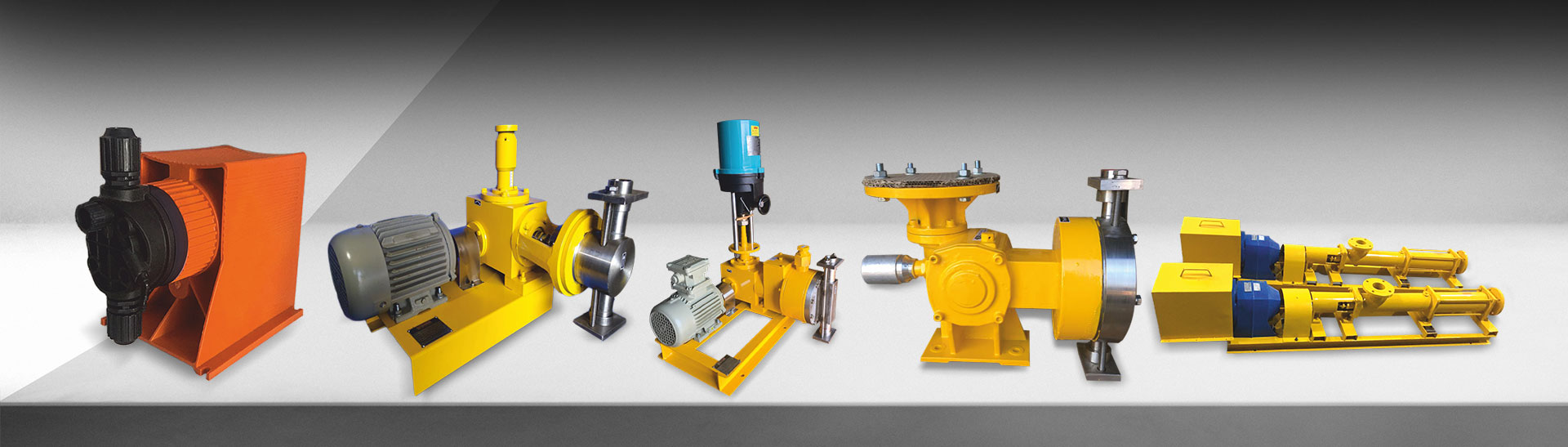
1) Mechanical Diaphragm Metering Pumps
Positive displacement with a flexible diaphragm. Good chemical compatibility and simple maintenance.
Typical use: General water treatment, cooling towers, boiler feed conditioning.
2) Hydraulic Diaphragm Metering Pumps
Oil-backed diaphragm for high pressures and safer operation with aggressive media.
Typical use: Chemical plants, refinery utilities, critical pH neutralization where leak-free design matters.
3) Solenoid (Electromagnetic) Dosing Pumps
Pulse-driven strokes, compact, and cost-effective.
Typical use: Laboratories, low-to-medium flow pH correction, OEM skids.
4) Peristaltic Dosing Pumps
Tubing compression moves fluid. Excellent for shear-sensitive or viscous media and easy maintenance.
Typical use: Hypochlorite, polymer, food-grade additives, small ETPs.
5) Integrated pH Controller + Pump Packages
Pre-engineered automatic pH dosing systems with pH sensor, transmitter, controller, dosing pump, and safety interlocks.
Typical use: Turnkey WTP, ETP, STP panels, compact skids for OEMs and EPC projects.
Typical System Architecture
Signal & Flow Path:
- pH sensor
- Transmitter
- Controller with setpoint and PID
- Dosing pump with stroke length or frequency control
- Chemical tank with mixer, suction strainer, NRV, pulsation dampener, and calibration column
- Injection quill at the pipeline or tank
Benefits and Advantages
- Process performance: Tight pH bands improve reaction yields, coagulation, CIP effectiveness, and product quality.
- Operational efficiency: Auto start-stop, alarm handling, and proportional control keep operators focused on exceptions.
- Compliance and data: Event logs, trends, and audit trails simplify environmental reporting.
- Asset protection: Stable pH reduces corrosion and scaling in downstream equipment.
- Sustainability: Right-sized dosing cuts chemical consumption and neutralization by-products.
How to Choose the Right pH Dosing Pump
Key Selection Factors
- Capacity and pressure: Define max and normal flow, discharge pressure, and turndown ratio required.
- Chemical compatibility: Select materials for acids, caustic, coagulants, or neutralizers (e.g., PTFE diaphragms, SS316, PVDF, EPDM, FKM).
- Control strategy: Manual, on-off, proportional, or full pH controller with PID.
- Accuracy and turndown: Aim for linear turndown 10:1 to 100:1 depending on dynamics.
- Environment: Enclosures for outdoor, wash-down, or hazardous areas.
- Maintenance access: Valve kits, tubing, and diaphragms should be simple to swap.
Small-Scale vs Large-Scale
- Small plants & OEM skids: Solenoid or peristaltic pumps with compact controllers, limited I/O, and panel-mount displays.
- Large treatment systems & process plants: Hydraulic diaphragm metering pumps with pulse dampeners, VFD dosing, redundant pumps, and DCS integration via 4–20 mA or Modbus.
Quick Decision Checklist
- Do we know peak flow and worst-case pH deviation?
- Is the chemical aggressive or viscous?
- Do we need PID control and data logging?
- What accuracy and turndown are required?
- Any ATEX or hazardous-area requirement?
- What is the planned maintenance window and spares policy?
Considerations: Efficiency, Cost, Sustainability
- ROI and lifecycle cost: Consider pump efficiency, diaphragm life, check-valve reliability, and chemical savings from better control.
- Energy efficiency: Solenoid units suit low flow; for higher capacities, efficient hydraulics or VFDs reduce energy.
- Sustainability: Accurate metering lowers neutralization sludge and reduces chemical transport.
- Safety: Secondary containment for chemical tanks, leak-detection switches, foot valves with strainers, and back-pressure valves for stable metering.

Leave A Comment